
The Reserve Bank of India (RBI) net-bought $7.4 billion from the spot foreign exchange market in February, its highest buy since March 2025, before heavily intervening by selling dollars in March as the rupee declined over 4 per cent following a spike in crude oil prices.

Reserve Bank of India (RBI) Governor Sanjay Malhotra stated that preventing second-round effects of supply shocks, where inflation expectations rise due to prolonged disruptions, is the primary role of monetary policy. He also defended the RBI's foreign exchange market interventions, asserting it did not commit to an 'indefensible peg'.

It underperformed peers amid volatile capital flows and uneven forex support.

If the REER is to be restored to its 2004-05 level, the rupee has to depreciate a lot, says V K

If net forex outflows turn out to be relatively high in the next few years, the rupee could depreciate beyond Rs 80 to a dollar by 2022. The causal reasons could, for example, include unmet expectations of FPI and FDI investors about the performance of the Indian economy, sharp rise in prices of imported oil and decrease in FX remittances. The RBI has to ask itself whether guaranteeing future rupee-dollar exchange rates on FX forward contracts is a reasonable way to use its risk-bearing capacity, says Jaimini Bhagwati.

The rupee is undervalued as compared to its peers, shows the latest data from the Reserve Bank of India (RBI), even as the local currency keeps hitting new lows.

The Indian rupee depreciated a modest 2.9 per cent in the first nine months of the current fiscal, performing better than other currencies like the Canadian Dollar, South Korean Won and the Brazilian Real, according to the Economic Survey tabled in Parliament on Friday. The value of the Indian Rupee (INR) is market-determined, with no target or specific level or band.

'Calibrated depreciation will help rebalance external fundamentals, offset some of the tariff differentials with competitors, improve the competitiveness of domestic substitutes vis-a-vis Chinese imports, and contribute to the easing of financial conditions at a time when the inflation rate is unusually low,' explains Sajjid Z Chinoy, head of Asia Economics at JP Morgan.

For a grim subject matter as grim as this, it's refreshing that Sentimental Value avoids becoming a manipulative, melodramatic tearjerker, notes Mayur Sanap.

Alliances fight wars effectively only when they share an endgame. If Israel acted without US knowledge, then the military alliance is operating without real coordination at the level of strategic targeting. Neither picture is reassuring in a war that is no longer regional in its consequences. Prem Panicker continues his must read daily blog on the Gulf War.

The LPG squeeze on India's restaurant sector is the quotidian face of a deeper crisis.

One Battle After Another touches on big ideas like racism, immigration, abuse of power, identity, and parenthood without turning preachy, observes Mayur Sanap.

Mirroring the traditional hawala system, where money is sent through non-banking channels, this digital version uses the anonymity of unregulated cryptocurrency to erase the financial trail and inject cash into the domestic economy.

Finance Minister Nirmala Sitharaman on Sunday announced an increase in the Securities Transaction Tax (STT) on Futures and Options trade with a view to discouraging small investors from speculative trading in derivatives, which led to a sharp decline in the stock market.

Almost a decade after India shifted to a formal inflation-targeting regime under the Monetary Policy Committee (MPC) framework of the Reserve Bank of India (RBI), a high-level panel of economists said that the flexible inflation targeting has largely worked in keeping it under control and no major revamp is required.

But weak global demand, costly imports play spoilsport


The expectations of a borrowing cut by the government faded among bond-market participants after the general election results because they feel the compulsions of running a coalition may put pressure on the exchequer, according to dealers. The recent trend of moderate depreciation in the rupee's nominal effective exchange rate (NEER) might not persist if there are significant changes to the structural reform agenda.

While growth in India is largely domestic and hence the overall GDP effect may not be more than 0.15-0.2%, but overall trade will be impacted due to every country going back to the drawing board, points out Madan Sabnavis.

A strong currency helps in fighting some of the import-led inflation.

'It is time to allow the rupee to move towards its true value, as it is hurting Indian exports, investment and SMEs associated with export sectors that create jobs,' argues Pravakar Sahoo.

The latest balance of payments data released by the Reserve Bank of India (RBI) last week indicate that the CAD in fiscal 2010-11 could be anywhere between 3.5 and 4.0 per cent of gross domestic product (GDP).

Under its new chairman Tuhin Kanta Pandey, the Securities and Exchange Board of India (Sebi) has gravitated towards greater transparency and ease of doing business, setting an objective of "effective and optimum" regulation. On Monday, during its first board meeting under Pandey, the regulator has decided to constitute a high-level committee (HLC) to review conflicts of interest and unveiled initiatives to simplify regulatory processes.
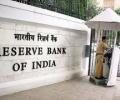
The rupee has not depreciated enough against other currencies.

Rupee volatility could be dampened if it is steadily manoeuvered to levels consistent with inflation differentials, say Jaimini Bhagwati and Abheek Barua

Infrastructure and inflation targeting are expected to be top priorities for the new Reserve Bank of India governor, says A V Rajwade.

The currency market won't care for our moans, groans, cries and sighs. The rupee will find its own level, explains Tamal Bandyopadhyay.

Following are the highlights of the Economic Survey 2022-23 tabled in Parliament on Tuesday

The country's gross domestic product (GDP) growth is likely to be 8.8 to 9 per cent in the current financial year, driven by agriculture and industry sectors, Care Ratings said in a report. The country's economy had contracted by 7.3 per cent in fiscal 2020-21. The agency said the outlook for the Indian economy on almost all counts in FY22 would look seemingly better than FY21 on account of the negative base effect.

It is surprising that central bankers around the world have cautioned the US Federal Reserve against raising rates.

The country's foreign exchange reserves surged by $58.38 billion in April-September 2021 to $635.36 billion, says an RBI report released on Wednesday. The forex reserves were at $576.98 billion at end-March 2021. The Reserve Bank of India (RBI) publishes half-yearly reports on management of foreign exchange reserves.

Richard Clarida's recent paper could be key for policymakers in deciding whether India should move to an 'inflation targeting policy regime', says Vivek Dehejia.

It would be a miracle indeed if we grow at 7/8 per cent a year over the current and next few years, says A V Rajwade

It is high time to manoeuvre the rupee more effectively and predictably, even as it has to be recognised that such tweaking of the rupee needs to be accompanied by reforms to the real sector and factor markets.
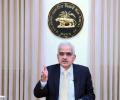
The challenge for the RBI in 2024 is likely to be less about containing elevated inflation and more about curbing excessive financial market exuberance and a 'problem of plenty', notes Sajjid Chinoy, Chief India Economist JP Morgan.

Only Rs 10,720 crore of the junked currency notes did not return to the banking system, rest 99.9 per cent was deposited raising question mark over the government's effort of curbing black money through the demonetisation.

'Revision of the base year for both CPI and GDP are long overdue.' 'The basic data that went into the 2011-2012 series were mainly from surveys done in 2011 or earlier.' 'We have since seen the emergence of new sectors like platform-based work and online marketing.' 'The employment surveys and the consumption surveys need to reflect these adequately.'

The US Federal Reserve has raised its benchmark interest rate by 0.25 per cent, only the second increase in a decade.

Some banks might charge you a nominal amount of Rs 100-150 for issuing the card.
 © 2026 Rediff.com - Advertise with us - Disclaimer - Privacy Policy - Sitemap - Feedback - About us - Terms of use - Grievances